Project Description
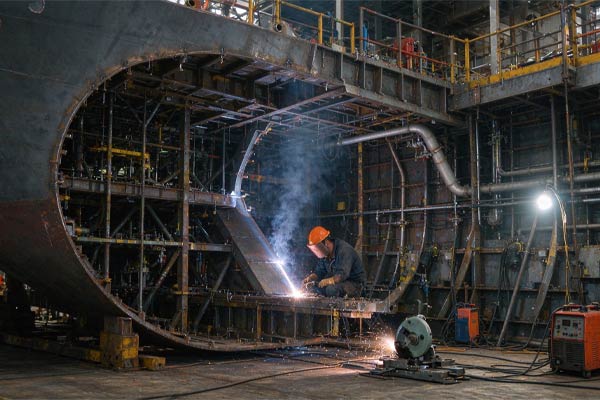
Modern shipbuilding and offshore engineering cover large commercial vessels, specialized workboats, luxury yachts, and offshore platforms. Wide-range materials include marine-grade carbon steel, high-strength steel, stainless steel, and aluminum alloys. Our fiber-laser solutions cover hull plate cutting, deck panel processing, structural bulkheads, marine piping systems, ship interior fit-out, and maintenance parts. Support prototype fabrication, small-batch customized vessels, and high-volume serial shipbuilding. Achieve high-precision contour cutting, hole array machining, bevel preparation and tube-sheet mixed production for marine applications.
Application & Advantage
- Process marine-grade high-strength steel, stainless steel and aluminum alloy ship plates
- One-step finish complex contours, dense bolt hole arrays and welding bevels for hull structures
- Mould-free flexible processing for customized ship design & vessel modification
- Sheet-tube integrated machine handles flat deck plates and marine tubular components together
- Stable repeat accuracy meets strict requirements for watertight integrity and structural strength
Segment‑oriented Industry Solutions
Hull & Deck Structures
Industry Pain Points
Hull and deck structures are the core components of a ship, including bottom plates, side plates, deck plates, and large reinforcement members. These parts are typically very large, thick, and require bevel preparation for welding. Traditional plasma or flame cutting causes large heat-affected zones and thermal deformation. Dimensional errors during plate cutting can lead to severe problems during block assembly and watertight welding.
- Large heat-affected zone causing thermal deformation of thick plates
- Traditional cutting methods leave rough edges requiring extensive grinding
- Complex bevel profiles on hull plates are difficult to achieve consistently
- Dimensional deviation affects the precision of ship block assembly
Our Laser Solution
High-power fiber laser cutting machine with large working area handles thick hull plates and deck panels. Advanced bevel cutting heads allow one-step V-groove or Y-groove preparation for welding. The focused laser beam ensures a narrow heat-affected zone, minimizing thermal deformation. High precision guarantees accurate block assembly and subsequent watertight welding.
- High-power laser cuts thick marine steel with minimal deformation
- One-step bevel preparation significantly improves welding efficiency
- High precision ensures accurate edge quality for hull block assembly
- Reduce secondary grinding processes, saving labor and time
Ship Cabin & Bulkhead Parts
Industry Pain Points
Ship cabins and bulkheads include partition panels, stiffeners, door frames, and ventilation cutouts. These components often use thin to medium steel plates and require numerous lightening holes and access openings. Traditional punching or shearing processes cause plate distortion. Different ship layouts require frequent changes in cutting patterns, making traditional die-based methods inefficient.
- Thin plates easily deform under mechanical punching or shearing
- Frequent design changes for different cabin layouts
- Dense hole arrays require multiple processes and increase error accumulation
- Bulkhead cutting requires high edge quality for subsequent painting
Our Laser Solution
Fiber laser cutting offers non-contact processing for thin and medium ship plates, completely eliminating mechanical deformation. Mould-free technology allows instant switching between different cabin designs. The laser can cut complex outlines, door frames, and dense ventilation holes in a single pass. Clean edges are ready for subsequent painting or welding processes.
- Non-contact cutting prevents thin-plate deformation
- Mould-free processing enables quick adaptation to cabin layout changes
- One-step cutting of complex outlines and dense hole arrays
- Clean and smooth cutting edge reduces post-processing costs
Marine Piping Systems
Industry Pain Points
Marine piping systems include ballast water pipes, fuel pipes, hydraulic pipes, and exhaust pipes, mainly made of stainless steel and specialized alloys. Ship piping requires complex end profiles, bevels, and precise flange connections. Traditional sawing creates burrs and requires further machining. The complex spatial layout of ship pipes makes prefabrication difficult.
- Traditional sawing leaves burrs affecting pipe welding quality
- Complex pipe end profiles and bevels are difficult to process
- High risk of fitting errors during pipe prefabrication
- Stainless steel and alloy pipes are hard to machine traditionally
Our Laser Solution
Professional tube laser cutting machines perform high-precision cutting of marine pipes. Support 3D cutting for complex pipe intersections, end bevels, and flange holes. Non-contact cutting avoids pipe deformation and leaves burr-free edges. The integrated software optimizes pipe nesting and simulates the ship's spatial layout, ensuring perfect fit-up during installation.
- Burr-free pipe cutting improves welding quality and efficiency
- 3D laser cutting handles complex pipe intersections and end profiles
- High precision ensures accurate flange fit-up and installation
- Smart nesting software reduces material waste for marine piping
Ship Propulsion & Shaft Parts
Industry Pain Points
Propulsion system components include shaft brackets, stern tubes, propeller hubs, and rudder components. These are critical safety parts requiring extremely high dimensional accuracy and structural integrity. Materials are often thick forged steel or high-strength castings. Traditional machining is time-consuming and costly, especially for complex flange hole arrays and keyways.
- Critical parts require extremely tight dimensional tolerances
- Thick materials make traditional drilling and machining slow
- Complex geometries increase the risk of machining errors
- High cost of custom machining for unique propulsion components
Our Laser Solution
High-power fiber laser cutting machines process thick shaft brackets, rudder plates, and flange components with exceptional accuracy. The laser can quickly drill dense bolt-hole arrays and cut complex keyways without tool wear. Digital processing ensures high repeatability and reliability for safety-critical propulsion parts, reducing manufacturing lead time.
- High-precision cutting ensures critical dimensional accuracy
- Non-contact laser drilling eliminates tool wear for thick plates
- Fast processing of complex flange hole arrays and keyways
- Stable repeatability guarantees quality consistency for safety parts
Offshore Engineering Structures
Industry Pain Points
Offshore structures such as oil rigs, wind turbine foundations, and platforms require heavy structural steel, large-diameter pipes, and specialized connection nodes. These structures face harsh marine environments and require strict anti-corrosion and welding standards. Processing large, thick components with complex shapes challenges traditional fabrication methods.
- Extremely thick and large components are difficult to handle
- Complex node geometries require high-precision cutting
- Harsh environment demands perfect edge quality for coating
- Strict welding standards require precise bevel preparation
Our Laser Solution
Heavy-duty fiber laser cutting systems equipped with large gantries process heavy structural steel and thick-walled offshore pipes. Advanced beveling capabilities prepare precise welding grooves for critical joints. The laser creates a clean, narrow cut with minimal heat input, preserving material properties and ensuring excellent conditions for anti-corrosion coatings and high-standard welding.
- Heavy-duty laser systems handle thick offshore structural steel
- Precise beveling ensures high-quality welding for critical nodes
- Clean edges facilitate superior anti-corrosion coating adhesion
- Minimal heat input preserves the mechanical properties of heavy steel
Ship Interior & Fit-out Hardware
Industry Pain Points
Ship interior fit-out includes decorative panels, handrails, brackets, ventilation grilles, and custom metal furniture. These components often use stainless steel and aluminum for aesthetics and corrosion resistance. Many are small, complex shapes requiring precise cutting without surface scratches. Traditional stamping or shearing can damage surface finishes and requires high mold costs for custom designs.
- Visible parts require perfect surface finish without scratches
- Many custom designs make traditional molds uneconomical
- Complex decorative patterns are hard to achieve traditionally
- Thin stainless steel and aluminum easily deform during processing
Our Laser Solution
Precision fiber laser cutting provides a non-contact solution for interior fit-out parts. It easily cuts complex decorative patterns, precise handrail brackets, and intricate ventilation grilles. The non-contact process completely avoids mechanical scratches on stainless steel and aluminum surfaces. Mould-free processing allows for highly customized interior designs with short lead times.
- Non-contact processing protects the aesthetic finish of marine interiors
- Easily achieve complex decorative patterns and custom shapes
- Mould-free cutting supports small-batch customized fit-out projects
- Clean cutting edges are perfect for direct installation or polishing
Superyacht & Aluminum Hulls
Industry Pain Points
Superyachts and high-speed vessels extensively use aluminum alloys to reduce weight and improve speed. Aluminum has high reflectivity and thermal conductivity, making it challenging to cut with traditional lasers. Aluminum hull plates and superstructures require precise cutting to ensure smooth assembly and flawless final painting finishes.
- High reflectivity of aluminum challenges traditional cutting methods
- Aluminum easily deforms due to high heat input
- Yacht hulls demand high-precision assembly for aesthetic perfection
- Thin aluminum superstructure panels require delicate handling
Our Laser Solution
Our fiber laser systems are equipped with a specialized aluminum processing database to stably cut reflective aluminum alloys. Optimized cutting parameters minimize heat input, preventing thermal deformation of thin yacht hull plates. The high-precision cuts guarantee smooth assembly of aluminum superstructures, ensuring a perfect foundation for the final yacht paint and finish.
- Specialized parameters ensure stable cutting of highly reflective aluminum
- Low heat input prevents deformation of thin aluminum yacht panels
- High precision ensures seamless assembly of superyacht structures
- Create perfect edges for high-end yacht painting and finishing
Ship Repair & Maintenance Parts
Industry Pain Points
Ship repair and maintenance involve cutting replacement plates, patches, and structural components for existing vessels. This often happens in dry docks or on-site where conditions are harsh. Parts must be fabricated quickly and fit precisely into existing structures. Traditional cutting methods are difficult to move and slow to set up for urgent repair jobs.
- Urgent repair jobs require rapid fabrication of replacement parts
- On-site cutting conditions are harsh and space-constrained
- Fitting patches to existing structures requires high precision
- Repair materials vary widely, requiring flexible processing capabilities
Our Laser Solution
Our mobile and compact fiber laser cutting solutions are ideal for ship repair environments. Fast setup and flexible operation allow operators to quickly cut replacement plates and structural patches. The high-precision capability ensures the replacement parts fit perfectly into existing hull structures, reducing fitting time and getting the vessel back to sea faster.
- Flexible and movable systems adapt to shipyard or dry-dock environments
- Fast setup and rapid cutting speed for urgent repair jobs
- High precision ensures perfect fit of patch plates and brackets
- Capable of processing various metals found in marine repair